
Climate innovation is increasingly moving from the laboratory and pilot stage into the marketplace. However, transforming promising technology into scalable solutions requires more than technological innovation. Commercial viability, measurable impact, operational integration, and collaboration across the ecosystem are equally important.
This was the focus of Climate Innovation Acceleration (CIA) 2026’s Ecopreneur Bintang Lima, a market validation and business pitching forum organized by HSBC and Ecoxyztem to connect climate-tech entrepreneurs with government, corporates, investors, industry experts, and ecosystem enablers.
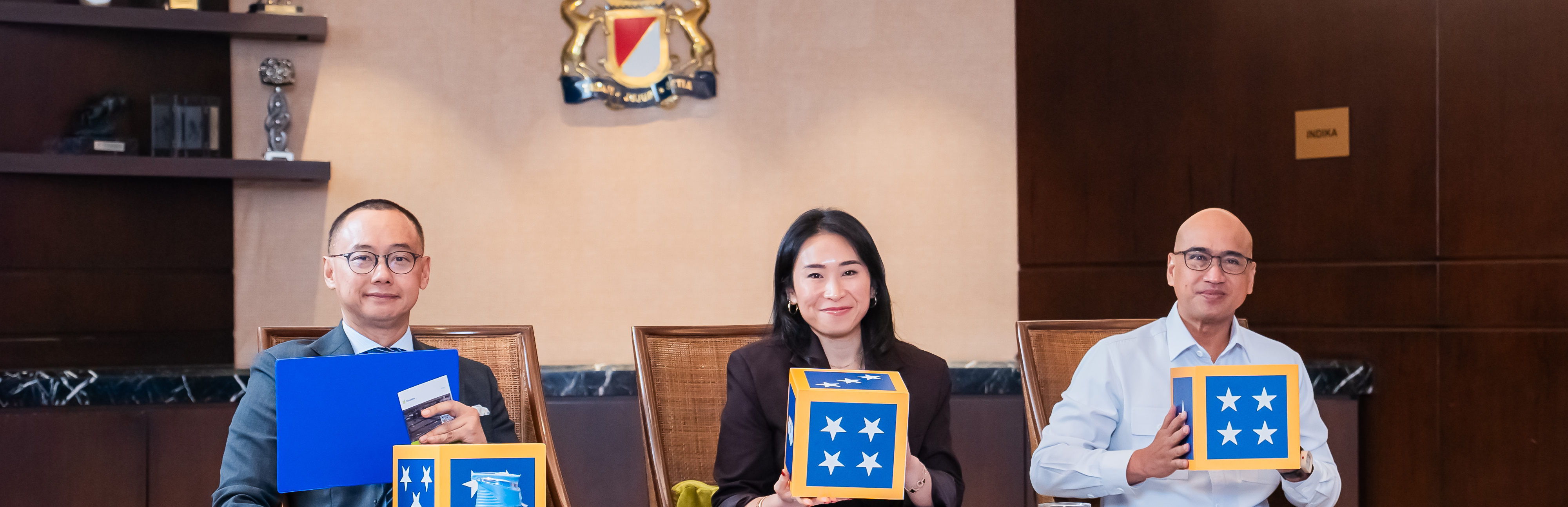
Representing MODENA, Nicole Jizhar, Executive Vice President of MODENA Group, joined Eddy Soeparno, Vice Chairman of the People’s Consultative Assembly (MPR RI), and Mulya Amri, Executive Director of KADIN Institute, as session experts for the Industrial Decarbonization session.
Under the theme “Accelerating Low-Carbon Industries,” the session brought together three ecopreneurs developing solutions across different areas of climate innovation: Ravelware Technology, Crustea Indonesia, and myECO.
Ravelware Technology presented its approach to transforming plastic waste into green graphene, creating opportunities for low-carbon and high-performance industrial applications. Crustea Indonesia showcased its solar-powered, AI-enabled aeration technology designed to improve aquaculture productivity while reducing energy consumption. Meanwhile, myECO presented an AIoT-based energy management solution that helps businesses improve operational efficiency while reducing building emissions.
Moving Climate Innovation from Technology to Adoption
The session highlighted an important question for the climate-tech ecosystem: What makes a climate innovation ready for the real world?
From a corporate perspective, the answer extends beyond the technology itself. Climate solutions need to address genuine business challenges while demonstrating clear value and measurable impact. They also need to be commercially viable, compatible with existing operations, and capable of scaling beyond individual pilots.
For businesses, this is particularly relevant as decarbonization increasingly becomes part of operational and strategic decision-making. Solutions that can simultaneously contribute to environmental goals and improve efficiency, productivity, or resource management have greater potential to move from innovation into mainstream adoption.
Through the discussion, the three ecopreneurs received perspectives from government, industry, and ecosystem stakeholders on the opportunities and considerations involved in bringing their solutions to market.
Creating Space for Market Validation
Ecopreneur Bintang Lima introduces a 1–5 Star Rating System as an alternative approach to conventional startup pitching competitions. Rather than focusing solely on selecting a winner, the platform provides participating ecopreneurs with practical market feedback on their commercial readiness and collaboration potential.
The rating framework distinguishes startups across three levels: 1–2 Stars for solutions requiring significant improvement, 3–4 Stars for those requiring further improvement, and 5 Stars for startups with potential for follow-up collaboration.
For MODENA, this approach reflects the importance of constructive engagement between climate innovators and the industries they aim to serve. Direct feedback from corporate practitioners can help startups better understand market expectations, identify potential gaps, and strengthen their solutions for future implementation.
The session also reinforced that Indonesia's transition toward a lower-carbon economy will require collaboration across sectors. Government and policymakers can help create an enabling environment, industry can provide market access and practical implementation opportunities, while entrepreneurs bring new technologies and business models to address emerging challenges.
As a company committed to advancing sustainability through innovation, MODENA sees opportunities for greater collaboration between these stakeholders as an important part of accelerating climate action.
Ultimately, the challenge is no longer only to develop innovative climate solutions, but to create the pathways that allow those solutions to be adopted, scaled, and translated into measurable impact.