
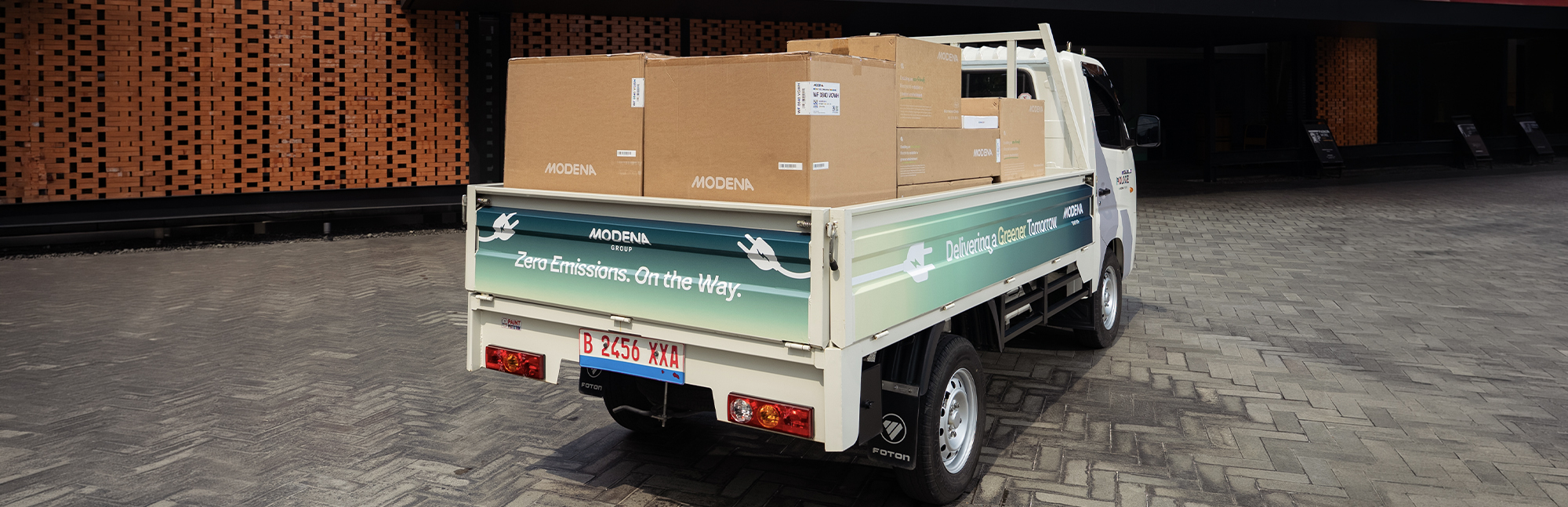
In celebration of Earth Day 2026, MODENA Group reaffirms its commitment to sustainability through a series of initiatives implemented throughout the year. A key highlight is the company’s operational transformation through MOLOGIZ, its logistics subsidiary, which has begun transitioning from diesel-powered vehicles to electric vehicles (EVs).
In parallel, MODENA continues to expand access to clean water through the MODENA Pure Hub program and collaborates with waste management platform Duitin to encourage more responsible consumption among consumers.
For decades, MODENA has been known as a home appliance manufacturer that delivers innovative solutions to households. As global challenges evolve, the company is expanding its role to address sustainability issues and contribute to a more resilient future.
Transitioning to EVs: A Concrete Step to Reduce Operational Emissions
Logistics and transportation are among the largest contributors to emissions, both within operations and across the value chain. At the same time, logistics plays a critical role in the electronics industry by ensuring efficient and timely product distribution. This makes transformation in the logistics sector an important step toward more sustainable operations.
Through MOLOGIZ, MODENA Group is taking a more active role in managing and transforming its logistics operations responsibly. The initiative not only improves distribution efficiency but also strengthens the company’s sustainability strategy by progressively reducing the environmental impact of logistics activities.

Since December 2025, MOLOGIZ has begun transitioning to electric vehicles, with more than 20 percent of its fleet now electrified. This shift is already delivering measurable results, reducing logistics-related emissions by up to 50 percent, equivalent to 2.3 tons of CO₂e since implementation began. Through the gradual electrification of its fleet, MODENA is not only lowering its operational carbon footprint but also laying the foundation for a more sustainable, low-emission logistics ecosystem in the future.
Expanding Access to Clean Water Through MODENA Pure Hub
As of 2026, MODENA has established 15 free drinking water access points across public spaces in Jakarta and surrounding areas through the MODENA Pure Hub initiative. Designed to expand access to clean water as a basic necessity, the program reflects MODENA’s commitment to delivering solutions that are not only technologically relevant but also create a direct and meaningful impact on everyday quality of life.
Throughout the year, MODENA has continued to expand the reach of this initiative by adding MODENA Reverse Osmosis Water Purifier access points across nine new locations. One of the latest sites was officially launched at JPM Lebak Bulus, a strategic pedestrian bridge connecting Lebak Bulus MRT Station with Poins Square in South Jakarta. The remaining eight locations were introduced during Ramadan at several public spaces, including Masjid Al Azhar and Masjid Al-Bakrie.

More than just refill stations, MODENA Pure Hub represents a broader movement that introduces a new approach to providing clean water access in public spaces. As of April 2026, the initiative has distributed more than 1 million liters of drinking water to the community while helping reduce plastic waste.
Promoting Responsible Consumption Through Turn Waste to Rewards Campaign
Since January 2026, more than 1,017 kilograms of waste have been collected and responsibly managed through MODENA’s collaboration with the Duitin platform. This initiative forms part of the company’s broader effort to build an ecosystem that enables consumers to adopt more environmentally conscious lifestyles, with a focus on making responsible waste management part of everyday habits.
Through this collaboration, MODENA encourages consumers to take an active role in responsible waste management by enabling the recycling of various types of materials. The largest contribution comes from used cardboard and product packaging, followed by plastics, glass, and used cooking oil. Beyond collection, this achievement reflects growing consumer awareness and a shift toward more circular consumption patterns.